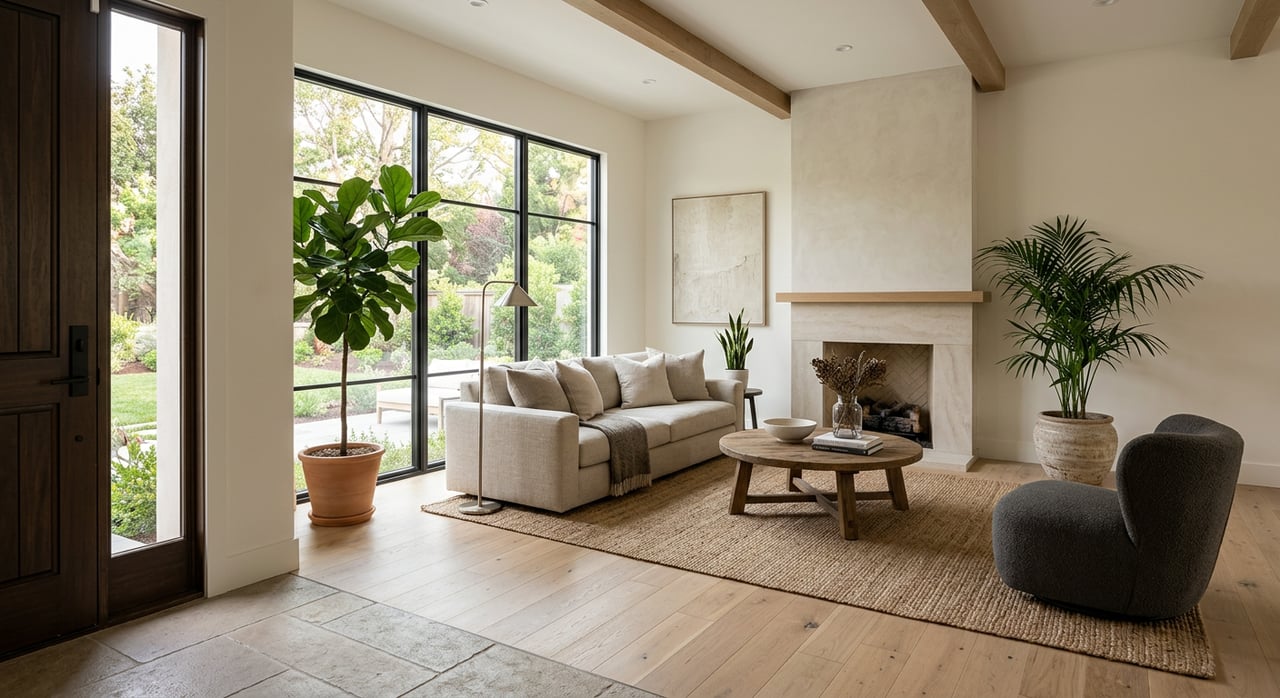
Thinking about selling your Atlanta home and wondering how to stand out in a crowded market? You are not alone. With more buyers comparing listings across Fulton County, presentation has never mattered more. In this guide, you will learn how professional staging helps buyers connect with your home, what a consultation includes, realistic costs and ROI, and how to plan your timeline so launch week makes the strongest impact. Let’s dive in.
Why staging matters in Atlanta now
Across the Atlanta metro, many neighborhoods have shifted toward a more balanced market where buyers have more options and take their time comparing homes. In this environment, strong photos and a polished, move-in-ready feel help your listing rise to the top. Staging does exactly that by guiding how your rooms look online and in person.
Price points and expectations vary by submarket in Fulton County. Upper-end intown areas and North Fulton suburbs can behave differently from entry-level segments, so staging choices and budgets should match your neighborhood and price tier. A local market overview notes that submarkets across Metro Atlanta move at different speeds, which is why calibrating your plan by area and price point is key to ROI (Metro Atlanta submarket context).
What staging actually does
Helps buyers picture life there
The top benefit of staging is simple. It helps buyers visualize a property as their future home. In national surveys, buyer agents consistently report that staging makes it easier for clients to see how rooms function, which drives more showings and stronger interest (NAR summary on staging benefits).
Can raise offers and cut days
Many listing agents see meaningful pricing and speed advantages when homes are staged. In the latest research snapshot, agents most often reported a modest uplift in offers, commonly in the 1 to 10 percent range, along with reductions in days on market (NAR Profile of Home Staging snapshot; NAR news release). Results vary by property and pricing strategy, but even small percentage gains can be meaningful at Atlanta price points.
What to expect in a staging consult
A professional staging consultation is typically a focused, on-site visit followed by a written plan. Most consults last 60 to 120 minutes and include a room-by-room review, quick-win recommendations, suggested repairs or paint, and a proposal for occupied, partial, or full-home vacant staging. Consultation fees often range from about $150 to $600 in national data, which provides a useful baseline for Atlanta quotes (HomeAdvisor national cost guide).
During the consult, the stager will discuss your timeline, photography date, and list launch. You will receive a prioritized plan that aligns with your budget so you can choose a light refresh, a key-room focus, or a full-home transformation.
Rooms to prioritize
If you are focusing on impact per dollar, direct your budget to the living room, the primary bedroom, and the kitchen. These spaces most influence buyer decisions in national surveys and set the tone for the rest of the tour (NAR staging guidance on room priorities). Secondary bedrooms, flex rooms, and offices matter, but they usually come after the big three.
A simple timeline
- Day 1 to 2: Consultation, estimates, and finalizing your plan.
- Days 3 to 21: Decluttering, light repairs, and paint as needed. Scope drives timing.
- Days 22 to 24: Staging installation, styling, and cleaning.
- Days 24 to 26: Professional photography and media capture.
- Go live: List the home once the staged photos are ready so your first week online showcases the best version of the property (HomeAdvisor timeline overview).
Costs and ROI to plan for
Use national ranges as a planning baseline, then confirm with Atlanta quotes:
- Consultation: about $150 to $600.
- Occupied or partial staging: often $800 to $2,500 total for key rooms.
- Full-home vacant staging: commonly starts around $2,000 and can reach $5,000 or more depending on size and rental duration.
- Furniture rental: a common estimate is about $500 to $600 per room per month (HomeAdvisor national cost guide).
How does that translate to ROI? Many agents report offer improvements in the 1 to 10 percent band on staged homes compared with similar unstaged listings. For a $500,000 home, a 2 percent improvement equals $10,000. If staging costs $4,000, your net gain could be significant, even before considering the potential to reduce days on market and avoid price cuts (NAR research on price and speed effects).
Virtual staging is another tool. It is far less expensive per image and can be a smart way to market vacant homes online, but it does not change the in-person experience. Use it to boost listing traffic, then consider physical staging for top-tier showings and open houses (NAR staging guidance).
Occupied, vacant, or virtual?
Occupied staging: Uses your existing furniture with curated accessories and layout tweaks. This option keeps costs lower and works well if your pieces fit the target style.
Partial staging: Focuses on high-impact rooms like the living room, kitchen, and primary bedroom. It balances budget and impact and is common for entry to mid-tier price points.
Vacant staging: Brings in furniture and decor for a cohesive, high-end look. This creates strong photos and helps buyers understand scale and flow in empty spaces, which is especially helpful for larger homes or new construction.
Virtual staging: Digital furniture added to listing photos. It is cost-effective for online marketing but should be clearly disclosed. Consider pairing it with physical staging for key rooms once showing activity picks up.
Quick prep checklist before photos
- Declutter and start packing personal items to open sightlines.
- Deep clean kitchens and baths, including grout and fixtures.
- Replace burned-out bulbs and choose consistent light temperatures.
- Touch up paint on scuffed trim and walls where needed.
- Remove or store oversized furniture to make rooms feel larger.
- Freshen curb appeal by cleaning walkways and adding simple greenery.
- Schedule photography immediately after staging to capture everything at its best (NAR staging guidance on preparation and photos).
How our sellers’ concierge helps
You do not have to manage staging alone. Shannon’s sellers’ concierge streamlines the process with a complimentary staging consultation, contractor coordination for small cosmetic fixes, professional photography, targeted MLS and broker outreach, and polished marketing materials. You get a clear plan, a single point of contact, and a launch sequence designed to maximize your first week on market.
Staging is scheduled right before media day so your photos, 3D tours, and video reflect the full transformation. Then your listing goes live with a focused push to reach the right buyers. This concierge approach keeps your timeline tight and helps you capture peak online attention.
Is staging worth it for you?
If your home is dated, vacant, or priced in a competitive band, staging can be a smart investment. Many agents see modest but meaningful improvements in both price and speed, and that effect often increases when buyers have more choices. In Fulton County, match your plan to your submarket and price tier, then use staging to highlight what already makes your home special.
Ready to map out the right approach for your home and timeline? Connect for a complimentary consult and a custom staging and marketing plan from shannon cartrett.
FAQs
Does staging really raise sale prices in Atlanta?
- National surveys of agents frequently report a 1 to 10 percent uplift in offers on staged homes, along with faster sales, though actual results vary by neighborhood, condition, and pricing strategy (NAR staging research).
How much should I budget for staging in Fulton County?
- Use national ranges as a starting point: about $150 to $600 for a consult, $800 to $2,500 for partial or occupied staging, and several thousand for full-home vacant staging with monthly furniture rental billed per room (HomeAdvisor cost guide).
Which rooms matter most for buyers?
- Prioritize the living room, primary bedroom, and kitchen, since these spaces most influence buyer decisions in national guidance and surveys (NAR staging guidance).
How long does the staging process take from consult to listing?
- A simple plan can be completed in about two to four weeks, including consult, light repairs or paint, staging installation, and professional photos, with timing driven by scope and contractor availability (HomeAdvisor timeline overview).
Is virtual staging enough to sell my home?
- Virtual staging is a budget-friendly way to improve online photos, but it does not change the in-person experience; pairing it with physical staging for key rooms often delivers better results for showings and open houses (NAR staging guidance).
Who pays for staging and when?
- Most sellers pay staging vendors directly before listing, often with monthly rental for vacant installs; your agent can coordinate vendors and timing so installation happens right before professional photography (HomeAdvisor cost guide).
What should I do before the stager arrives?
- Declutter, start packing personal items, complete quick fixes like bulbs and hardware, and make access easy for vendors; these low-cost steps help the staging day move faster and smoother (NAR staging prep tips).