Trying to choose between Panama City and 30A can feel like comparing two very different versions of Gulf Coast living. You may want beach access, lifestyle appeal, and long-term value, but you also want your money to go further. The good news is that each market serves a different kind of buyer, and understanding those differences can help you make a smarter move. Let’s dive in.
Panama City vs 30A at a Glance
If your main goal is value, Panama City stands out quickly. Recent market snapshots put Panama City at a median sale price of $294,000 and about $190 per square foot. By comparison, Walton County sits at $751,000 and $377 per square foot, while Santa Rosa Beach is around $1.08 million and $574 per square foot.
That pricing gap matters because it changes what you can realistically buy. In simple terms, Panama City tends to stretch your budget further, while 30A asks you to pay a premium for a highly branded coastal lifestyle. Panama City Beach often lands somewhere in the middle, with a median sale price of $390,000 and about $304 per square foot.
Why Panama City Appeals to Value Buyers
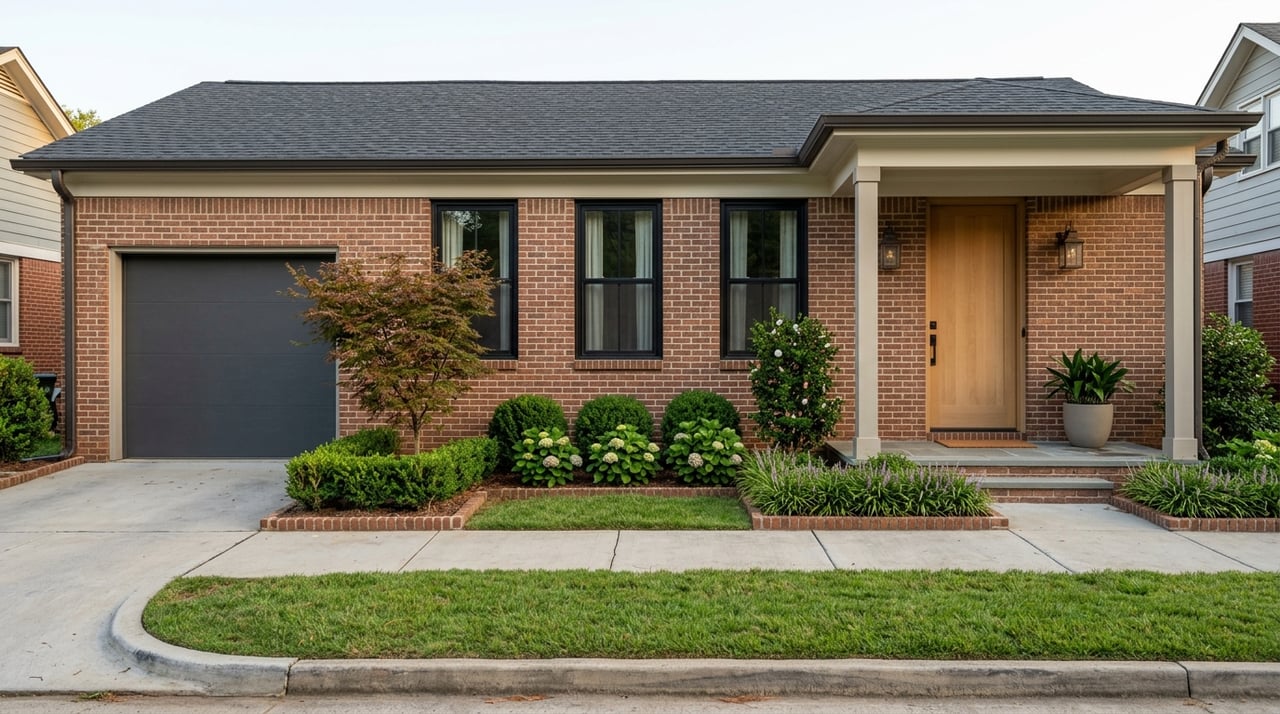
Panama City offers a different kind of Gulf Coast experience than 30A. It is a bayfront city on St. Andrews Bay with two public marinas, public boat ramps, arts venues, sports facilities, Bayway transit, and quick access to Northwest Florida Beaches International Airport. That mix can make daily life feel more practical and connected.
If you are looking for a primary home, a larger property for your budget, or a place with everyday convenience, Panama City often makes more sense. The city’s planning activity also points toward redevelopment and infill, which suggests ongoing change over the next 10 to 20 years. Current projects include mixed-use development, affordable multi-family housing, neighborhood park revitalization, and the phased rebuild of the Downtown Marina.
For many buyers, that means you are not just buying a home. You are also buying into a city that appears to have room to evolve.
Why 30A Commands a Premium
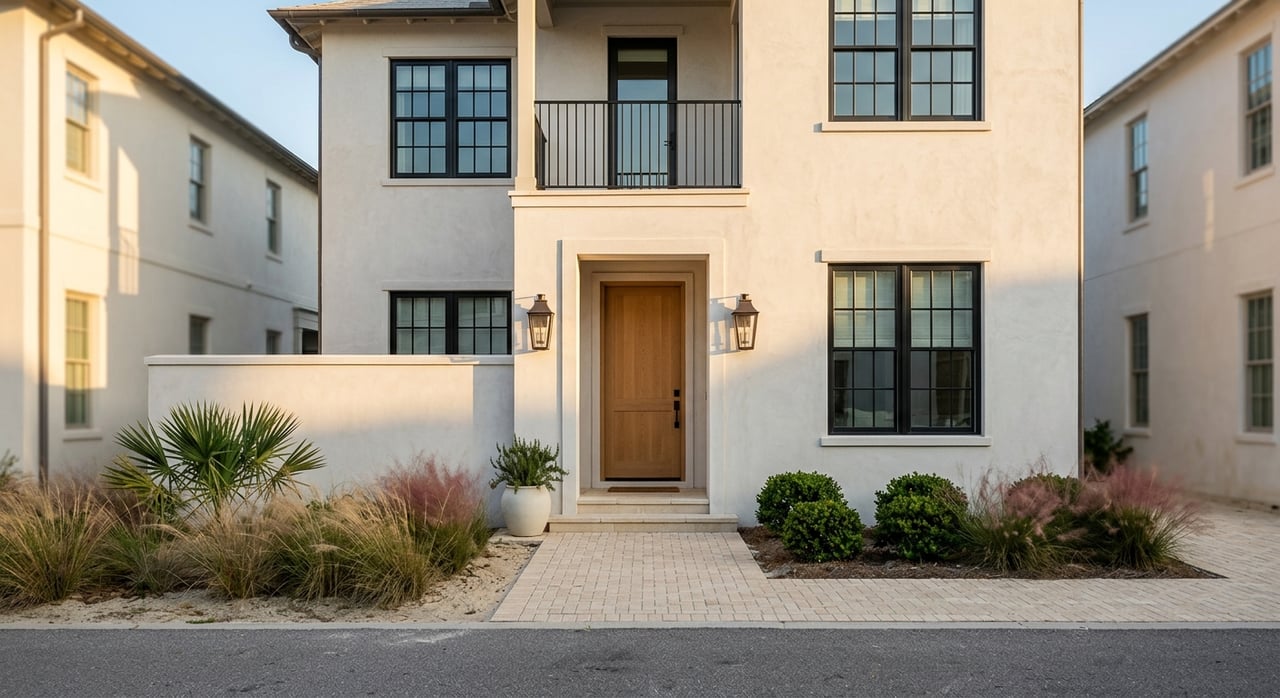
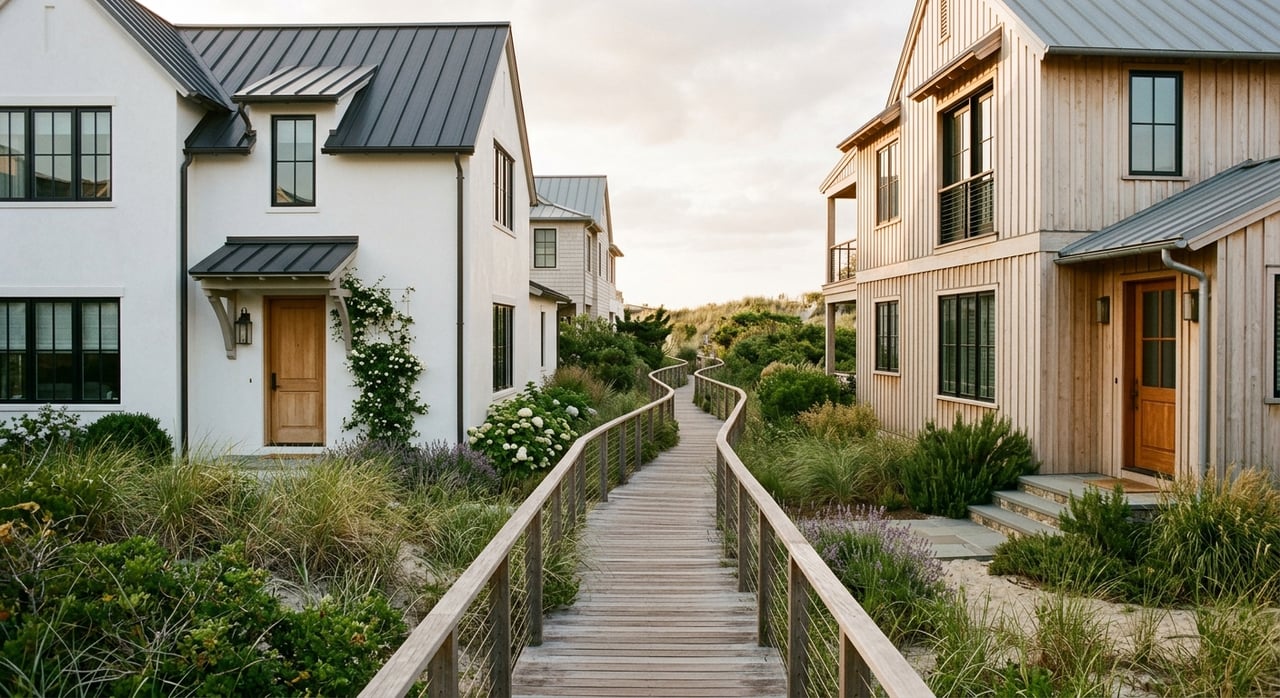
30A is not simply another beach market. It is a scenic corridor in Walton County built around beach neighborhoods, dune lakes, trails, state parks, and a strong lifestyle identity. Official tourism materials describe it as 26 miles of beaches with 16 unique beach neighborhoods.
That brand power shows up in pricing. Santa Rosa Beach, Rosemary Beach, and Alys Beach all represent increasingly premium tiers, with Rosemary Beach around $3.75 million and Alys Beach home values averaging $5.55 million. Buyers in these areas are often paying for location, design, scarcity, and the overall experience as much as the structure itself.
If you want a second home, a resort-style setting, or a design-forward beach community, 30A may be the better fit. But from a pure numbers standpoint, it is rarely the budget-first choice.
How Far Your Money Goes
One of the clearest ways to compare these markets is by price per square foot. Panama City is around $190 per square foot. Walton County is about $377 per square foot, and Santa Rosa Beach is about $574 per square foot.
That means Walton County is roughly double Panama City on a price-per-square-foot basis, and Santa Rosa Beach is roughly triple. So if your priority is maximizing square footage per dollar, Panama City has the advantage. If your priority is prestige, beach branding, and a more curated coastal setting, 30A may feel worth the higher cost.
Panama City Beach as the Middle Ground
Some buyers do not want to choose between value and a direct beach-oriented lifestyle. That is where Panama City Beach can enter the conversation. Based on current market snapshots, it sits between Panama City and 30A in both median price and price per square foot.
Panama City Beach also continues to market itself as a year-round destination. Bay County tourist development tax collections were reported up 7% in November 2025, 10.7% in December 2025, and 7.8% fiscal year-to-date. Visit Panama City Beach also reported that four sports tourism events in 2024 produced more than $57 million in total economic impact and brought in 39,128 visitors.
For buyers who want stronger beach tourism visibility without jumping fully into 30A pricing, Panama City Beach may offer a useful compromise.
What Rental Demand Really Means
A lot of buyers look at the Gulf Coast and assume vacation rental demand will make any purchase work. The reality is more nuanced. Demand can be strong, but the operating environment and acquisition cost still matter.
In Walton County, tourism had almost $5 billion in economic impact in 2024 and more than $4 billion in direct visitor spending. Visitors accounted for 71% of county spending and generated a net tax benefit of more than $68 million. In winter 2024, the county reported 603,300 room nights, 499,300 visitors, 33.3% occupancy, and RevPAR of $65.39.
Those numbers show a major tourism engine, but they do not automatically guarantee an easy investment story. On 30A, the purchase-price base is so high that buyers often need premium nightly rates and strong occupancy to justify the entry cost. That makes the math very different from a lower-priced market.
Short-Term Rental Rules Are Not the Same
If you are thinking about rental income, you need to look beyond demand and focus on local rules. Panama City requires short-term rentals to register with the state, county, and city, and they are limited to specific zoning districts. The city also notes a 1% merchant fee and a 5% county tourist development tax.
In unincorporated Bay County, short-term rentals require annual certification and inspection. Walton County also requires annual registration and currently lists fees of $300 per individual property or $227 per community, with a $500 per day penalty for operating without registration. These differences matter because they affect setup, compliance, and holding costs.
In other words, strong visitor traffic does not mean every property is equally simple to operate as a rental. Before you buy, you need to understand both the market and the rules in the exact area you are considering.
Beach Access and Everyday Enjoyment
Access is another practical detail that can shape your experience. Bay County says all of its beaches are public and that it maintains 96 public access points. South Walton reports 58 public beach access points, including nine regional accesses, plus additional access from four state parks.
That tells you both areas offer meaningful public beach access, but the layout and feel are different. Panama City and Panama City Beach may appeal if you want a broader public-access system and more flexibility. 30A may appeal if you are drawn to its trail systems, state parks, and beach-neighborhood atmosphere.
What Future Development May Mean
Buyers often ask where future value might come from. In Panama City, the story appears to be redevelopment, public investment, and neighborhood evolution. The city is updating its comprehensive plan, rebuilding the Downtown Marina, and supporting community redevelopment projects.
On 30A, the story looks different. Official county and tourism updates point more toward access and infrastructure improvements, including the Seagrove Regional Beach Access grand opening, Grayton Central parking, a new Driftwood Road parking facility targeted for June 2026, and more than $76 million spent since 2016 on beach access and parking expansion.
That suggests Panama City may have more room for infill and redevelopment, while 30A value may depend more on scarcity, access management, branding, and premium positioning. Neither is automatically better. It depends on what kind of appreciation story you want to buy into.
Which Market Fits Your Goals?
The best choice comes down to your priorities.
Choose Panama City if you want
- More house for the money
- A practical primary-residence option
- Bay access, marinas, and city amenities
- Exposure to redevelopment and long-term neighborhood change
Choose 30A if you want
- A premium coastal lifestyle
- A second home with strong brand appeal
- Design-forward communities and beach-neighborhood character
- A market where scarcity and prestige are central to value
Consider Panama City Beach if you want
- A middle-ground price point
- A beach-focused market with year-round tourism efforts
- Better affordability than many 30A communities
- A stronger resort feel than inland Panama City
The Bottom Line on Gulf Coast Value
If your question is strictly about value, Panama City is usually the better answer. It tends to offer the most square footage per dollar, a more practical daily-living setup, and a lower entry point than both Panama City Beach and 30A.
If your question is about lifestyle prestige, second-home appeal, or buying into one of the Gulf Coast’s most recognized beach corridors, 30A can absolutely make sense. You are just paying for a different package. The smartest move is matching the market to your goals, not chasing a headline or a trend.
Whether you are comparing a primary home, a second home, or an investment purchase, working with someone who understands both the lifestyle side and the numbers can save you time and costly mistakes. If you want help weighing Panama City against 30A, connect with shannon cartrett for a personalized conversation.
FAQs
Is Panama City more affordable than 30A?
- Yes. Recent market snapshots show Panama City at about $294,000 median sale price and $190 per square foot, compared with Walton County at $751,000 and $377 per square foot.
Is 30A better for a second home than Panama City?
- It can be, especially if you want a premium beach setting, design-forward communities, and a resort-style lifestyle rather than a more practical everyday city environment.
Is Panama City Beach a good middle option between Panama City and 30A?
- Often, yes. Panama City Beach currently sits between the two in pricing and offers a more beach-driven experience than Panama City without reaching many 30A price points.
Are short-term rental rules the same in Panama City and Walton County?
- No. Panama City, unincorporated Bay County, and Walton County each have their own registration, inspection, zoning, fee, and compliance requirements.
Does strong tourism in 30A guarantee strong rental returns?
- Not necessarily. Tourism is strong, but the high purchase-price base means buyers often need premium nightly rates and strong occupancy to make the numbers work.
What makes Panama City appealing for a primary residence?
- Panama City offers a bayfront setting with marinas, boat ramps, arts and sports venues, transit options, airport access, and generally more day-to-day convenience for full-time living.